
setting the context
a little bit of what we're facing rn

"I think the best case is so unbelievably good that it's hard for me to even imagine. I can sort of imagine what it's like when we have just, like, unbelievable abundance and systems that can help us resolve deadlocks and improve all aspects of reality and let us all live our best lives. But I can't quite. I think the good case is just so unbelievably good that you sound like a really crazy person to start talking about it."
The bad case — and I think this is important to say — is, like, lights out for all of us. I'm more worried about an accidental misuse case in the short term."
When I was first coming up with the overall ideation for living protocol, one of the questions I got was something along the lines of: Why should we think that the future isn't human-friendly now?
It's not that anyone can know for sure that the future isn't human-friendly - no one can predict the future, particularly when it comes to AI. Yet we don't know for sure that it will be.
I've quoted Sam Altman above on what he thinks are the potential best and worst case scenarios when it comes to AI. Though the worst case (which he notes to be important to acknowledge!) is the doomsday scenario, there's a potential scenario that people may not think as much about, albeit less severe than full-on extinction: a world where humans are still around, but where humans are not flourishing.
This could mean a world where humans are disconnected from their own lives - out of meaningful work, disengaged from their relationships, increasingly isolated and demotivated. Such a world might have powerful corporations, as well as continuously advancing AGI, but with individuals in a weakened state and unable to thrive. We'd be living with AI, but we wouldn't be living well with AI.
Well, Altman did also add "*So I think it's like impossible to overstate the importance of AI safety and alignment work. I would like to see much, much more happening."* We do have people working on AI safety and alignment. What else? There's the rest of us - those of us working on AI applications and tech that leverages AI, and those who are purchasing and consuming these products and related media, and no doubt starting to use AI at work and for everyday purposes. This is especially the case with the rise of the creator economy, especially in recent years. More creatives, inventors, thinkers, entrepreneurs, you name it! are creating and working in public, and simultaneously learning from and giving feedback to others. This is a scene teeming with opportunities to inspire each other, support each other and keep each other in check all at the same time while also improving our own creations.
A lot is happening all at once. Like all long-term games where our existence comes under risk, we still need to continue doing the usual work like ensuring businesses and governments work on policies and regulations that actually benefit and protect people; holding them to task. It's just that this time, a lot of the work of ushering in a possible golden age falls on us.
And there has never been an opportunity such as this. Unlike previous revolutionary milestones in history such as the invention of the printing press, development of the scientific method, age of enlightenment etc etc, this is a time of unrivalled connectivity and sharing. We can actually talk about what’s happening to us now right as things happen. It's undeniable that the Internet and social media brought particular problems along with them, but leveraging the good, we can use these tools and related platforms we already have to share resources and goodwill all over the globe. We can create, discuss and shape the present and future in real time, as it happens. So our discussions are much more likely to have an impact on development as compared to past revolution cycles. Even if multiple threats arise and mistakes are made, as they are sure to, we don't have to face them all on our own, by ourselves. For one, we can actually navigate this unknown territory and co-shape it together - the collective will matters, let’s seize the day. Also, assuming we’re paying attention to what we’re doing and what others are making, we can quickly backtrack and work on our mistakes.
Now you may say this is all well and good. But didn't we previously have glorious hopes and dreams for social media, too? And look how that's turned out. True. Right now, a recent tweet from Humane comes to mind:
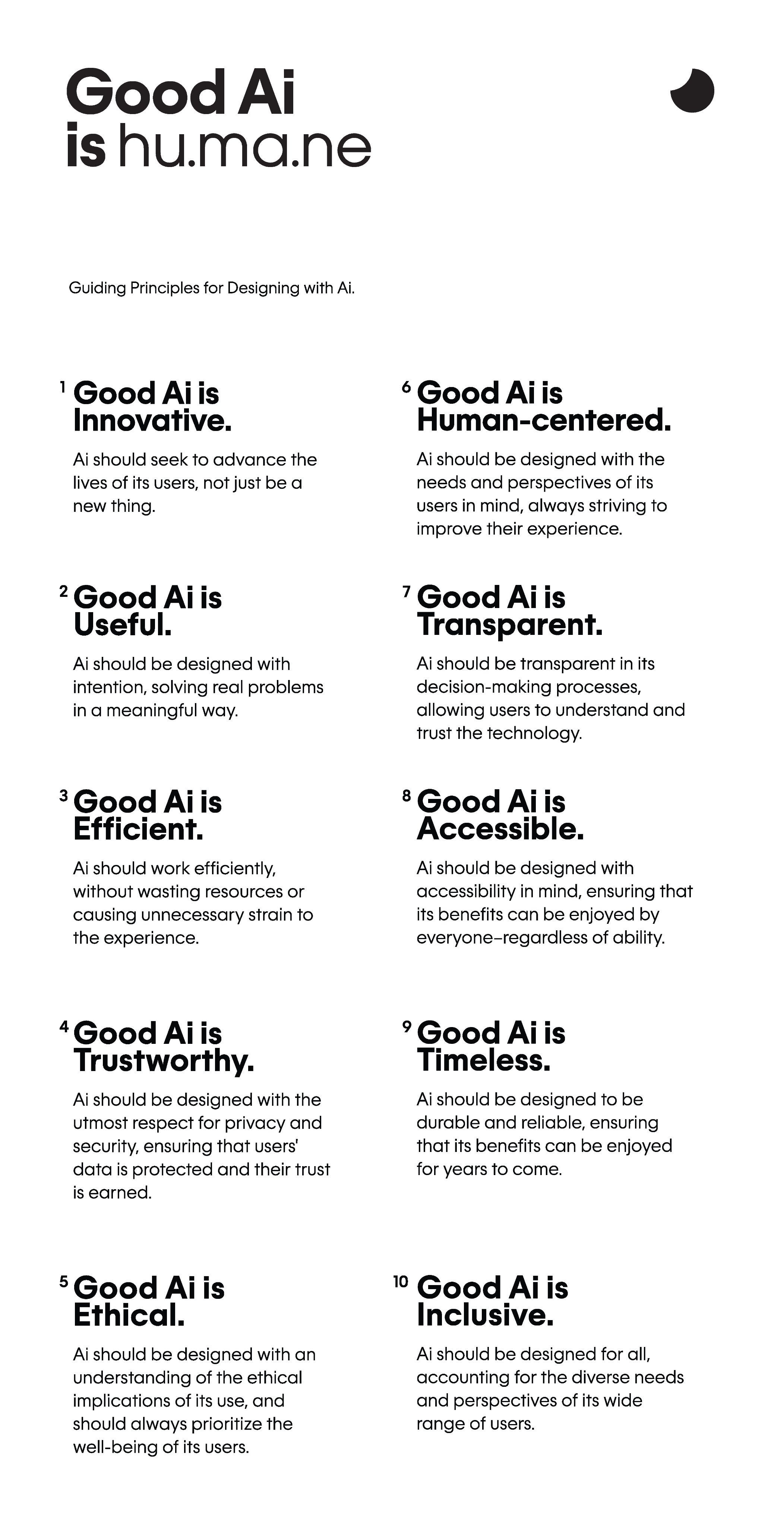
As some sharp observers in the comments section noted, this was likely based by Dieter Ram's design principles:
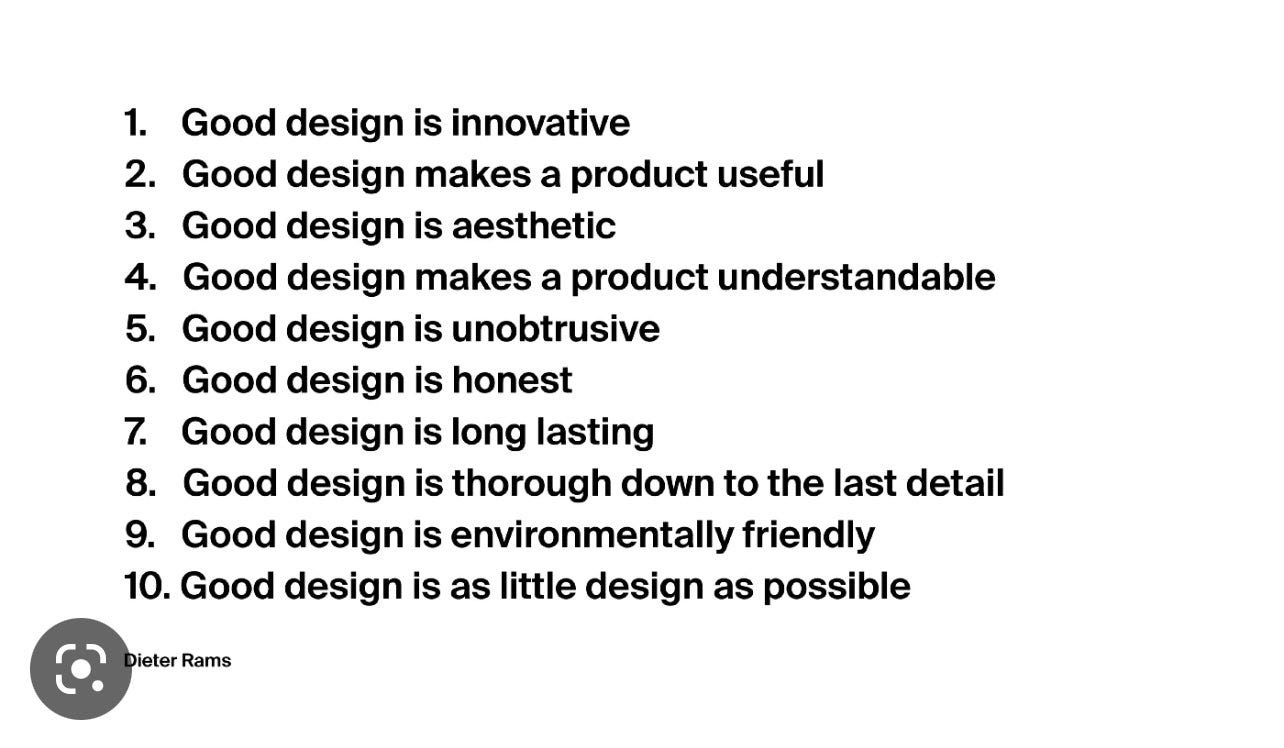
And yet we face apps which are designed to profit off our time, attention and data, at the risk of our well-being and often optimal means of living. It's ostensible that we've often started with certain principles, all to abandon them when such plans meet messy reality. Likewise, it's reasonable to think that we might need good practices going forward when we have new AI entities emerging across multiple life domains, but it is quite likely that things will simply not pan out the way we hope they will. At least not exactly.
Hence living protocol as an open discussion, a living garden, a community space. I never previously thought to write publicly even when tech previously showed its downsides in business models that sought to extract and sell data at all costs, even as it brought joy, fun and entertainment, enriched socialising and learning, and a whole diversity of new experiences we couldn’t have dreamt of just a few years ago. But there was always an option to opt-out to a certain extent, even though it was proving to be increasingly difficult. Yet the young people of today and future face a 50-50 future of possible triumph or tragedy regardless of whether they know about AI at all, regardless of whether they're actually even users of the tech.
Now, now - don’t get me wrong. I love technology, and quite a lot of what it’s enabled. I love the YouTube comments section. I love tweet threads which teach me something new. I have countless Tiktok bookmarks. I love the numerous online communities with bustling Internet streets filled with enthusiasts and passionate creators. I’m very online. I’m not saying to stop building. It’s just that all this stuff is important too, all right? Let’s prioritise creating thoughtfully and with intention over mindless hustle.
In the next few posts, I'll probably dive a little deeper into various topics - psychology, AI access, AI safety, human creativity, whatever I’m curious about:) as starting points. But let's touch on one right here - a key part of the human experience is being able to choose. Will we be able to make choices aligned with lives we want to live? Will humans still have the room to be thoughtful and make impulsive mistakes, will their choices at least be informed? Food for thought.
Let me know of your thoughts in the comments below or email - always happy to hear others' perspectives!